The presidents of the United States, Barack Obama and Russian President Vladimir Putin, met during the UN General Assembly in New York, after making speeches exposing divergent views on the war in Syria.
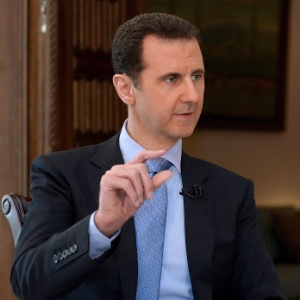
The theme was the thorniest of the meeting 90 minutes between the two leaders. Both have different views on the role of Syrian President Bashar al-Assad, and possible solutions to the civil war that has lasted four years and has killed 250,000 people.
"For Russians, Assad is a bulwark against extremists (the self-styled" Islamic State ", the" EI "), whereas for Americans, Assad is an element that ignites the flames of sectarian conflict," said a member of the high ranking US government.
Both presidents, however, agree with the need to seek a political solution to the conflict.
Speaking after the meeting, Putin did not rule out the possibility for Russia to join an alliance with Europe and countries of actions in the region against the "EI" if the mission has a UN mandate - although it has dropped send troops to Syria.
In his UN speech, Putin said he was "a huge mistake to refuse to cooperate with the Syrian government and its armed forces valiantly fighting terrorism."
Obama has already said it would work with any nation to solve the conflict, but he does not see Assad's tenure as feasible. "We have to recognize that there can be, after so much bloodshed, so much killing, a return to the status quo ante the war."
But the words of Obama and Putin also indicated that both are willing to reach a compromise, to seek some common ground in the fight against the "EI".
But what are the main difficulties to achieve delineate a common ground? The BBC World, the BBC service in Spanish, listed the four main points of contention between Washington and Moscow on the Syrian conflict:
1. The role of Assad
Assad is a historic ally of Moscow, whom Russia sees as part of the solution to the Syrian conflict, but that the United States see it as part of the problem.
The White House is convinced that the authoritarianism of the Syrian president is a major source of instability in the country, to provide fertile ground for Islamic extremists.
Obama, who has accused Assad of torturing and murdering their own people, certainly with Putin insist that a long-term solution pass through the exit of the power of her ally.
But the Russian president has always defended the Assad government's legitimacy and should insist on the thesis that any discussion of a political transaction in Syria involves the definitive defeat of EI.
But, it seems, both leaders could consider a transitional period with Assad in power.
2. Who support military
Putin directly supports the Syrian government forces. Washington already, and participated in bombings against EI, has supported more moderate opponents of the Damascus government.
A strategy, however, has been criticized and even ridiculed by Putin on the eve of his meeting with Obama.
Putin also stressed that "illegitimate military support organizations contradicts the principles of international law and the UN Charter."
Since the White House said he believed that the Russian support to the Syrian Army that Assad will feel less pressured to negotiate and thus put an end to the conflict.
3. Different regional allies
Not only in Syria that the US and Russia have elected different allies.
In its bombing campaign against the Islamic State, the US told from the beginning with the support of Saudi Arabia, which shares with the White House in order to defeat Assad.
Already Russia, in turn, surprised everyone by announcing on Sunday an agreement to share intelligence about EI with Iraq and Iran, an ally of Damascus government.
And given the regional dispute between Iranians and Saudis, many felt that this would stimulate the emergence of anti-EI rival coalitions.
This would be even more pronounced with the Russian decision to extend the agreement to Syrian security forces - and force Washington to question their relationship and Moscow with Iraq, another ally in the fight against EI.
4. Protagonism nuisance versus desired role
The biggest difference between Obama and Putin on Syria may be the way they view their own role in the conflict.
The United States seem to follow dragged him some against their will. And Obama knows that a greater involvement in the war in Syria may end up weakening it internally.
Putin already has this problem: the situation strengthens its image as a leader able to return to Russia international leadership lost after the fall of the Soviet Union. And it may even help the country's image in the world, harmed by the Russian intervention in Ukraine and annexation of Crimea.
Indeed, the US could have on Russia as an important ally in the fight against the Islamic state. And Putin knows it. And I know that the European Union is also seeking a solution to stop the flow of refugees arriving in coming region of Syria.
"Most likely, Putin will use the situation to charge reduction of sanctions imposed against Russia after the Crimea and to make the West accepted his return to the club of world leaders," he told BBC Munda Mikhail Izmailov, BBC Russia.

Nenhum comentário:
Postar um comentário