
"Canada" derives from the word "Kanata," which in the language of the Hurons and Iroquois Indians means "village" or "settlement." Since 1547 the maps designate as "Canada" across the region north of the St. Lawrence River.
Canada is the second largest country in the world, with 9,970,610 km2. The capital, Ottawa, is in the province of Ontario.
The country consists of ten provinces and three territories (capitals in parentheses):
Provinces: Alberta (Edmonton); British Columbia (Victoria); Prince Edward Island (Charlottetown); Manitoba (Winnipeg); New Brunswick (Fredericton); Nova Scotia (Halifax); Ontario (Toronto); Québec (Québec); Saskatchewan (Regina); Newfoundland and Labrador (St. John's).
Territory: Northwest Territories (Yellowknife); Yukon (Whitehorse) and Nunavut (Iqaluit).

Demography
Indigenous dance, Turtle Island, Ottawa Credit: Canadian Tourism Commission
Population
The last census, conducted in 2011, reported that the Canadian population is 33,476,690.
Major cities
According to Census 2011, most Canadians (84%) live in cities. The major cities are Toronto (5.58 million), Montreal (3.82 million), Vancouver (2.31 million), the National Capital Region of Ottawa-Gatineau (1.24 million), Calgary (1 22 million) and Edmonton (1.16 million).
Native Peoples
The 2006 Census found that about 4% of Canadians belong to one or more of the three indigenous groups recognized by the Constitution of 1982. Of these, 53% call themselves descendants of First Nations groups who occupied the southern regions of Canada, coming from a variety of cultural and linguistic heritage; 11% are native unspecified Nations to which they belong; 30% are Métis (Union of European children between father and Indian mother); and 4% are Inuit. A small portion of Canadian natives live in villages of indigenous reserves.
Ethnic origin
In 2006, 32% of the population declares itself as having ethnic origin only "Canadian", 36% said they had ancestors from the British Isles and 16% only French ancestors. Another 16% have other origins as indigenous, Arabic, Chinese, Indian, European, Asian (South and Southeast), among others.
Languages
Canada has two official languages. According to Census 2011, English is the mother tongue of 58% of Canadians and the French, 22% of the population. This census also revealed that more than 5,795,000 people in Canada speak both official languages of the country. These bilingual individuals representing 17.5% of the population.
Twenty percent of Canada's population, or about 6.63 million people speak a language other than English or French at home, combined or not with these. Some of the various languages spoken in Canada are Italian, Mandarin, German, Portuguese, Polish, Spanish, Hindi, Arabic, Ukrainian, Dutch and Greek. More than 200 languages are spoken fluently in day-to-day lives of Canadians.
More than 213,000 people speak an indigenous language and almost 25,000 reported the use of sign language.
Religion
Canadians, most of them are Christians. According to the 2001 Census, Catholicism has more supporters (43.6%), followed by Protestantism (29.2%). In both cases, the number of participants is relatively low. For decades the participation of Canadians in rituals and masses has been dropping precipitously. Other religions include Judaism, Islam, Hinduism and Buddhism. About 16.5% of the population said they did not follow any religion.

Geography
Mission Hill Winery, Okanagan Valley, British Columbia Credit: Canadian Tourism Commission
The Canadian territory encompasses a large number of mountain ranges. About two million lakes in Canada, covering approximately 7.6% of the country.
The St. Lawrence River, with 3058 km long, is the most important river in Canada, providing a seaway for ships coming out of the Great Lakes to the Atlantic Ocean. The longest river in Canada is the Mackenzie, running 4.241km, in the Northwest Territories.
Time zones
Canada has six time zones. Between the zone further east, Newfoundland and Labrador and the zone further west Pacific, there is a difference of five hours.

Climate
This huge country has great climatic variations and has four distinct seasons, especially in the region along the border with the United States - most populous region of Canada, stretching over 5500 km.
In summer, the daytime temperature can exceed 35 ° C, while in winter it is not unusual to reach -25 ° C. In spring and autumn temperatures are milder.
Main Natural Resources
The main natural resources are natural gas, oil, gold, coal, copper, iron ore, nickel, potash, uranium and zinc, along with wood and water.
National Parks and Historic Places
The Canadian government maintains 38 national parks, which cover about 2% of the land area of the country. There are 836 sites of historical importance. There are also over 1,000 provincial parks and nearly 50 parks in the Canadian territories.
Education
The educational system varies from province to province and comprises: 6-8 years of elementary school, four or five years of high school and 3 or 4 years of higher education (at undergraduate level). The percentage of people 15 years of age or older without high school diplomas decreased from 37.8% in 1990 to 19.5% in 2011. This is consistent with the increase in the percentage of population with post-secondary certification . From an international perspective, the performance of Canadian students in high school has been ranked, especially, in the top five in exams Programme for International Student Assessment (PISA).
Between 1990 and 2011, the proportion of individuals who had completed college or technical certification obtained increased by 9.4 percentage points, standing at 31.2%. Meanwhile, the percentage of individuals with a university degree rose from 10.9% in 1990 to 21.5% in 2011.
Sports
The most popular sports are ice hockey, cross-country and downhill skiing, swimming, baseball, tennis, basketball and football. The ice hockey and baseball are sports that attract viewers.

A just society and Multicultural
Mac lab in a Canadian university Credit: Credit Disclosure
Year after year, Canada has been described by the UN as one of the countries with better quality of life, considering the level and life expectancy, as well as the educational level of its population.
For its historical, social and cultural development, Canada is a multicultural country that is characterized by its spirit of moderation and tolerance; is a country united in its own diversity. This multicultural character of Canadian society has been officially recognized by the federal government, whose policies promote diversity and help to maintain the cultures and traditions of immigrants and indigenous peoples.

Group talking in the Campus Credit: University of Vancouver Island
Despite its cultural, ethnic, linguistic and religious, Canadians share core values that unite them. Among them are defending social justice, gender equality and linguistic duality of the country.
Are also among those values universal access to health and education, respect and tolerance for differences, respect for human rights, maintenance of a fair legal system and participatory and pluralistic democracy.
Statement of Rights and Freedoms
The Canadian Constitution contains a Declaration of Rights and Freedoms, which sets out certain rights and freedoms that neither the Parliament or any other provincial or territorial legislature can change. These include equality rights, mobility, legal and rights of freedom of expression, of association and of peaceful assemblies.
Political system
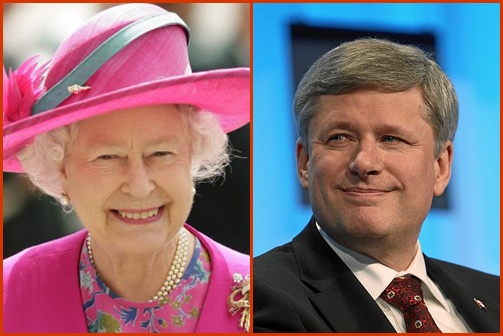
Canada is a constitutional monarchy, a federal state and a pluralistic parliamentary democracy. Queen Elizabeth II of the United Kingdom is the head of state of Canada. The Queen delegates her powers to her representative, the Governor General of Canada.
The Canadian head of government is the Prime Minister who, together with his cabinet, exercises executive power. The legislature is represented by Parliament consists of the House of Commons (308 members representatives of electoral districts) and the Senate (105 appointed senators).
Federal elections are usually convened every four years. In general, the party that wins the most seats in electoral districts form the government. The leader of this party becomes the Prime Minister of Canada.
Parliament is responsible for proposing, discussing and finally approving federal laws. Each province of the parliaments follow the same process.
The 1867 Canadian Constitution establishes federalism as a form of government and distributes the powers and functions between the federal government and the provincial governments. Canada has two legal systems: the English common law, which is the basis of federal law in force in nine of the ten provinces and three territories, and the Civil Code applied in the province of Quebec.
Past and present
Maple leaves
In the fifteenth century, before colonial expansion, Canada was inhabited by some 300,000 natives of very diverse cultures, which occupied all regions of the country and were nomadic, lived by hunting, fishing and subsistence farming.
During the sixteenth century, French and British explorers traveled to North America and the first colonies were founded in the early seventeenth century, from settlements linked to the fur trade. The French settled along the St. Lawrence and Mississippi rivers and the shores of the Great Lakes; British around Hudson Bay and along the Atlantic Coast.
During the seventeenth century, colonization and economic activity intensified and began the rivalry between the colonies of New France and New England. In this same phase, the conflict between France and Britain moved to the colonies and ended with a British victory. In 1763, with the Treaty of Paris, New France became a British colony. A few years later, Great Britain officially recognized French civil law and guaranteed religious and linguistic freedom for the French-speaking Canada.
On July 1, 1867, by Act of British North America, Britain established the Canadian Confederation, bringing together in one nation its four provinces: Upper Canada (now Ontario), Lower Canada (now Quebec) , Nova Scotia and New Brunswick.
The Confederation received the title of the Dominion of Canada, with its own government based on the British system. In the following years, Canada has expanded its borders to the northwest, incorporating other British colonies in North America. New provinces and territories were being established to set up the Canada of today.
As Canada has developed, it increased its prestige and influence in the world. Thousands of Canadian soldiers fought in both World Wars. Canada has joined the United Nations (UN) since its creation in 1945, and offered important support for its peacekeeping operations.
Also, is member of the Organization for Economic Cooperation and Development (OECD), the Free Trade Agreement of North America (NAFTA), the G8, the G2O, the North Atlantic Treaty Organization (NATO), the Organization for Cooperation and Security in Europe (OSCE) and the Organization of American States (OAS) and the Commonwealth and the Francophonie.
Canadian flag
Several people participated in the process that the Canadian flag was designed. Jacques St. Cyr contributed the stylized maple leaf, George Bist the proportions and Dr. Gunter Wyszechi with the coloring. The final determination of all aspects of the new flag was made by a committee of Parliament composed of 15 people, who were formally credited with the design. After extensive debate, the new flag was adopted by Parliament. It officially became the national flag on February 15 1965, the day that is now celebrated the Day of the Canadian Flag.
National Symbol
Long the maple leaf is associated with Canada: in 1868 she appeared in the emblems of the provinces of Ontario and Quebec, and in both World Wars, was part of the military emblems of the country. Since its introduction to the national flag in 1965, the maple leaf has become the most important symbol of the country (The provinces and territories have their own badges).
Coin
Canada's currency is the Canadian dollar - CAD $.

Standard of living
Canada has one of the highest living standards in the world. Since 1992, the country has been pointed out by the United Nations as one of the largest countries Human Development Index (HDI) of the world (which measures the progress of human development based on income, education and health), and the eleventh in the ranking of 2013.
Health Care and Social Security
All Canadians have free access to health care, except for dental services. Canada also has an extensive network of social insurance, which includes retirement for the elderly, child support, unemployment insurance and social security.

Canada Economic Indicators
The Gross Domestic Product (GDP) measures the value of all goods and services produced by a country during a period of one year.
The Canadian GDP was CAD $ 1.82 trillion Canadian dollars in 2012, with GDP per capita of $ 52,177 CAD. For the same year, the unemployment rate was 7.2%, showing a drop of 8% compared to 2010. Imports were $ 582.8 billion Canadian dollars and exports totaled $ 546.6 billion Canadian dollars in 2012. As for income per capita, Canada ranks fifteenth place, according to the index PPP (Purchasing Power Parity) of the World Bank report for the year 2012, with income of US $ 42,530.
Exports
Lead exports vehicles and auto parts, machinery and equipment, high-technology products, oil, natural gas, metals, and forest and agricultural products.
Imports
The country imports machinery and industrial equipment including communications and electronic equipment, vehicles and automotive parts, industrial raw materials (iron and steel, precious metals, chemicals, plastics, cotton, wool and other textiles), as well as manufactured goods and food.
Major industries
The main industries are: automotive, pulp and paper, steel, machinery and equipment, high-tech products, mining, fossil fuel extraction, timber and agricultural industry.
Canada-Brazil relations
National Synchrotron Laboratory research in Canada Credit: Canadian Light Source
Diplomatic Representations and Official Relations
Canada opened its first sales office in Brazil in 1866. The Canadian Embassy in Brazil was opened in 1944. Jean Desy was the first Ambassador of Canada in Brazil.
In May 1941, Brazil opened a diplomatic mission in Ottawa. The first Ambassador of Brazil in Canada was João Alberto Lins de Barros. In the years following World War II, Brazil was the focus of Canada's foreign policy in South America. In Brazil, Canada is represented by the Canadian Embassy in Brasilia.
Canada is also represented by General Consulados- in Sao Paulo and Rio de Janeiro. The Visa and Immigration Office in São Paulo is the fourth office busiest Canadian visas in the world. The Canadian Trade Promotion Service also has offices in Belo Horizonte, Recife and Porto Alegre.
Brazil is represented in Canada by an Embassy in Ottawa. Also has consulates in Montreal, Toronto and Vancouver.

Bilateral relations
Brazil is a priority for the Government of Canada, is at the intersection of strategy for the Americas and Global Strategy Government of Canada's trade. Canada's relations with Brazil have become increasingly close following our strategic interests and commitments based in promoting security, prosperity and democratic governance.
Our relationship has been strengthened by extensive cooperation across the government in various sectors such as health, defense, agriculture and science and technology.
Brazil is a priority market for Canada. It has a large economic role, not only in South America but also worldwide as our 10th largest global trading partner.
Trade relations between Canada and Brazil are in full growth - with nearly 32.2 billion Canadian dollars in trade and investment in 2012. Bilateral trade grew by 45% over the past five years, reaching 6.6 billion Canadian dollars in 2012 . Canadian exports to Brazil totaled 2.6 billion Canadian dollars, and include fertilizers, mineral fuel, machinery, paper and electronics.
Canada imported 4.0 billion Canadian dollars in Brazil, including the following sectors: inorganic chemicals, mineral fuel, sugar, machinery, precious stones, metals, coffee, iron, steel and processed foods. In 2012, Brazil was the 7th source of Foreign Direct Investment (FDI) in Canada, with $ 15.8 billion Canadian dollars in accumulated shares.
Brazil was the 12th largest recipient of Canadian FDI, with a total of $ 9.8 billion Canadian dollars in late 2012. About 500 Canadian companies are active in Brazil (over 50 only in the mining sector).
Partners for Science, Technology and Innovation
Research and innovation are also key elements of Canada's trade agenda and a point ever greater mutual convergence in our relations with strategic economies, such as Brazil. Instances in which scientific discoveries are associated with companies that can explore innovative approaches to business advantage are multiplying - illustrating the range of possibilities under the Science and Technology Agreement signed between Canada and Brazil.
Academic and Cultural Ties
Canada and Brazil share strong cultural and academic connections, which have expanded over the years.
Canada, a bilingual country, is the number one international destination of Brazilians for language study purposes. In 2011, nearly 20,000 Brazilians traveled to Canada to study. Since 2007, every year, more than 100 Brazilian students are awarded scholarships to study in Canadian universities.
Over the past 20 years, eight scientists and two Canadian economists were awarded the Nobel Prize. Canadian scientists have made significant discoveries in medicine, such as insulin, the pacemaker, the cobalt bomb used for cancer treatments, new treatments for pain and stress, as well as identifying the genes that cause many diseases such as muscular dystrophy.
Among the Canadian inventions include: the electron microscope, innovations in communication theories and precision tools for satellite navigation. Canada were also invented kerosene, the phone, the Blackberry, the washing machine, the zipper, the rollers, stainless steel, the technology of IMAX theater, basketball and hockey.
Credit Nunavut Tourism Nunavut
The first phone call and the first radio message was sent from Canada. A Canadian invented the Java language, which is used for creating web pages. The wireless and cable CANTAT 3, which allows transoceanic transmission of high-speed multimedia and capacity are Canadian inventions.
In the cultural field Canada also excels worldwide:
music: Celine Dion, Alanis Morissette, Neil Young, Rush, Michael Bublé, Bryan Adams, Avril Lavigne and Justin Bieber;
Literature: Marshall McLuhan, Margaret Atwood and Michael Ondaatje;
cinema (actors): Mike Myers, Donald Sutherland, Jim Carrey, Keanu Reeves and Ryan Gosling;
cinema (directors): Atom Egoyan, David Cronenberg and Denys Arcand;
companies: Cirque du Soleil, among others.

Nenhum comentário:
Postar um comentário